From overseas to Korea
The Bible crossed borders through books, translators, merchants, missionaries, readers, and Korean communities.
 Seoul Bible MuseumThe Living Word — a change maker
One book · two movements · living waters
The Book moved through Korea’s religions, traditions, and social order. The waves did not disappear.
Seoul Bible Museum is a permanent online museum, open now to visitors worldwide. Explore how Korea received the Bible, the impact it has had, and what the Bible means to you.
Read the story inside the logo ↓Look again
The boat is seen entering and exiting. Between those movements, the Bible passes through living cultural waters.
The Bible crossed borders through books, translators, merchants, missionaries, readers, and Korean communities.
Korea received the Book, made it speak in Korean, and carried it across new borders and languages.
The waves remain. Shamanic worlds, Buddhist inheritance, Confucian order, family traditions, modernity, and global culture did not simply vanish. The encounter continues.
Three questions in every room
These are recurring lenses, not a staircase of inevitable progress. Change is uneven, gains reverse, and the Bible continues to speak.
Korea’s existing cultures and social orders; Catholic books; translation in Manchuria and Japan; Korean colporteurs and communities; and the missionaries who followed.
Reception and resistance, obedience and misunderstanding, change and reversal—and what may still become possible as awareness of the Bible’s importance grows.
A personal question that, through the Great Commission, reaches family, community, country, and all nations.
Encounter, not replacement
Shamanic foundations, Buddhist inheritance, Neo-Confucian order, biblical encounter, industrialization, and globalization have displaced and absorbed one another, yet all remain present today.
Koreans sought the book out and carried it across the Manchurian border years before any missionary was legally admitted to distribute it. Ginseng and medicine traders from Uiju became the translation's Korean staff, then carried the printed Gospels home at real risk — one consignment was seized and thrown into the Yalu, and Seo Sang-ryun was jailed at Uiju in 1883.
These seven words are not stages. Several were happening at the same time.The book was also refused — as foreign intrusion, as a threat to ancestral rites and the order of human relations they upheld, and as a political danger. Catholic communities were persecuted from 1785 through the great persecution of 1866–73, which ended barely a decade before the first resident Protestant missionaries arrived.
These seven words are not stages. Several were happening at the same time.The translators put the text into hangul rather than literary Chinese, and deliberately so: Ross wanted a book for readers outside the hanmun-educated elite. The Korean sentences were drafted by Koreans first, then checked against the Greek and English word by word. Every translation opens a door and leaves work unfinished.
These seven words are not stages. Several were happening at the same time.The book arrived into a house already furnished. Shamanic expectation, Buddhist inheritance and Neo-Confucian order did not vanish; they supplied the categories through which the text was first heard — blessing, merit, filial duty, the ordering of a household. Fusion is neither automatically corruption nor automatically faithfulness.
These seven words are not stages. Several were happening at the same time.Some readers did what the text said. That is visible in schools opened for girls who had none, in clinics, in the care of people the social order had written off — and in refusals that carried real cost, including the shrine-worship refusals under Japanese rule.
These seven words are not stages. Several were happening at the same time.The same book was enlisted to justify colonial power, national ambition, class deference and male authority. In 1938 the Presbyterian General Assembly resolved that shrine attendance was a patriotic ceremony rather than worship. Women evangelists founded churches, yet the role was never an office under church law, and when women asked the Assembly for governing authority in 1933 they were refused.
These seven words are not stages. Several were happening at the same time.This museum reads the history a particular way: renewal came from people returning to the text and finding themselves judged by it, rather than from institutions reforming on their own initiative. Historians disagree — some argue the revival of 1907 turned the church away from political resistance in the years after 1905.
These seven words are not stages. Several were happening at the same time.One story
The Bible’s story is not a commentary attached to Korean culture. It is the path running through the whole museum.
God made the heavens and the earth, and made human beings in his image to live with him and care for his world.
Genesis 1–2Human beings distrusted God and disobeyed him. Sin damaged their relationship with God, one another, and creation.
Genesis 3; Romans 5:12God judged a world filled with violence, yet rescued Noah and his family and promised to preserve the earth.
Genesis 6–9People gathered to make a great name for themselves. God confused their language and scattered them into many peoples.
Genesis 11:1–9God called Abraham and promised to make a people through him and to bless every family of the earth.
Genesis 12:1–3; 15; 17God formed Abraham’s descendants into Israel, gave them his covenant, and called them to show his justice and mercy. Their story passed through kingdom, exile, and return.
Exodus 19:3–6; 2 Samuel 7:12–16; 2 Kings 25; Ezra 1Jesus announced God’s kingdom, showed God’s character, died for sins, and rose from death. In him, God’s promises move toward fulfillment.
Mark 1:14–15; Luke 24:44–47; 1 Corinthians 15:3–4The Holy Spirit formed the church and empowered Jesus’ followers to carry the good news across languages, cultures, and nations.
Acts 1:8; 2:1–12; Matthew 28:18–20God will renew creation, end death and sorrow, judge evil, and live with his people. The Bible’s story ends with life restored.
Revelation 21:1–5; 22:1–5Your kingdom come, your will be done, on earth as it is in heaven.
Matthew 6:10 · ESV
The permanent journey
From creation to renewed creation—the story that gives every other room its horizon.
Enter the galleryShamanic foundations, Buddhist inheritance, Neo-Confucian order, and a society already changing.
Enter the galleryKorean seekers, translators, colporteurs, Catholic communities, missionaries, and the books they carried.
Enter the galleryLanguage, women, class, medicine, education, resistance, fusion, compromise, and reversal.
Enter the galleryRevival and division, migration and broadcasting, mission and Korea’s unfinished global role.
Enter the galleryMany languages, multiple traditions, local agency, restriction, endurance, and living communities.
Enter the galleryA movement Seoul remembers
The 1988 Seoul Olympics welcomed the world with the slogan ‘The World to Seoul, Seoul to the World.’ Korea’s Bible story also carries a movement inward and outward. Yet neither the Bible’s reception in Korea nor Korea’s service beyond its borders is a finished story.
Korean seekers and translators, Catholic communities, colporteurs, missionaries, and readers encountered and carried Scripture along many routes. Recovering that history more fully remains work in progress.
Within the Great Commission, Korean churches became major participants in missionary sending, Bible production, translation support, and service. The story includes achievement, but also the responsibility to honor local leadership, cooperate, keep learning, and receive correction.
Background: Seoul Museum of History—The 1988 Olympics · Korea.net—Korean missionaries
The door that was closing
In the fifteenth century a Korean daughter inherited equally with her brothers. Ancestral rites came round to her in turn. Her husband often moved into her family’s house.
None of that held by the 1880s. Across three centuries the household turned patrilineal.
The door in this room is not shut. It is closing.
The shift was structural, not merely attitudinal. Residence moved from the husband entering the wife’s household toward the bride entering his; rites and property increasingly followed the male line. Yet restriction differed by class, and commoner women continued to work, trade, and petition the state.
So God created man in his own image… male and female he created them.
Genesis 1:27 · ESVA growing exhibition program
The Bible in Korean culture—language, art, literature, film, and daily life.
Enter exhibition →The thresholds Korean women crossed—and the glass door that remains.
Enter exhibition →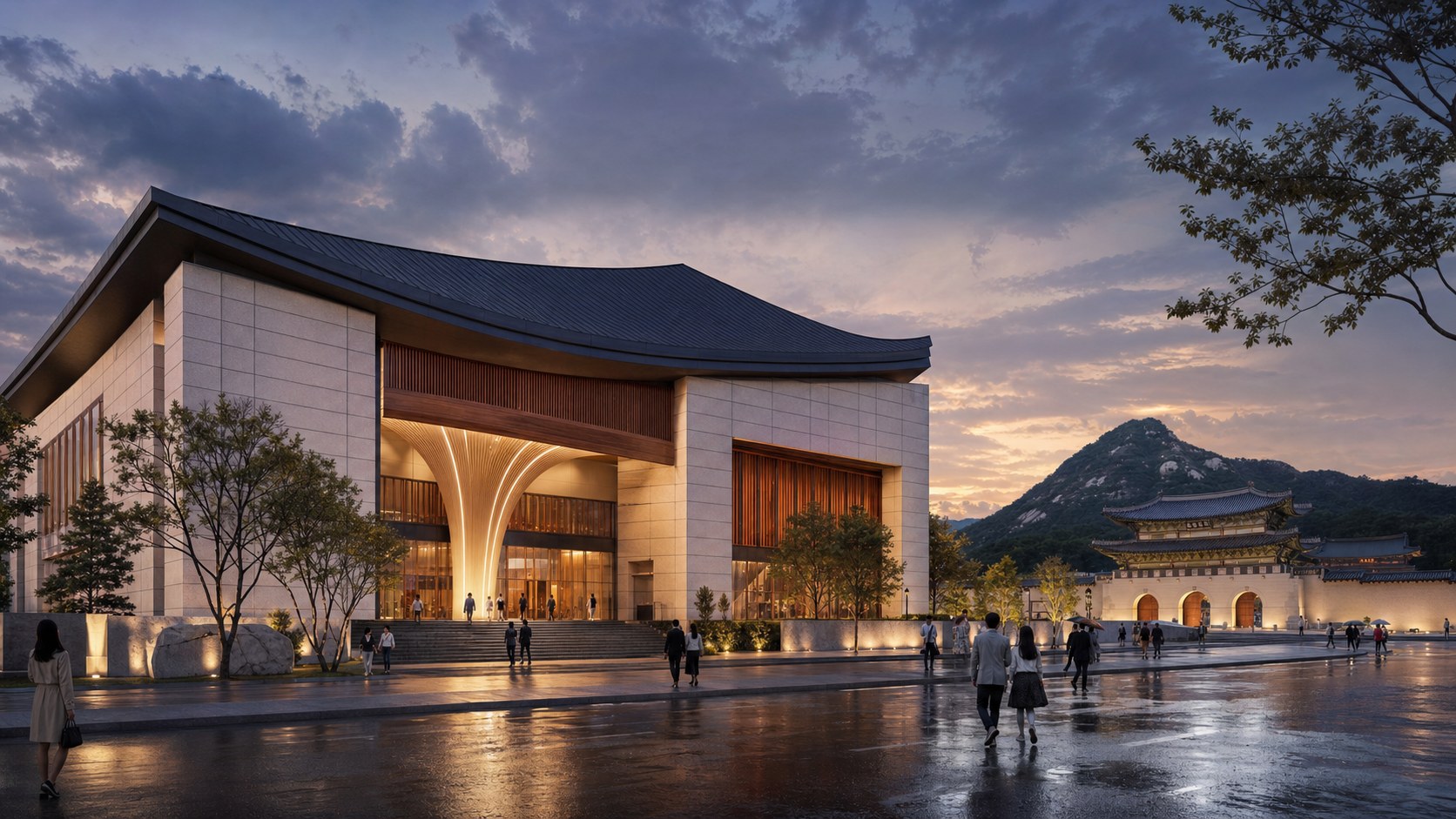
From virtual to Seoul
This virtual museum is a permanent worldwide museum and ministry in its own right. It will continue growing its research, collection, community, and public trust while helping make possible a physical museum in Seoul that can welcome Korea, Asia, and the world. The virtual museum will continue after the physical museum opens.
The Dream · Downtown Seoul
CrossCulture Community’s long-term vision includes a permanent physical home for Seoul Bible Museum in Seoul. That is a separate, future vision. The online museum is open and operating now.
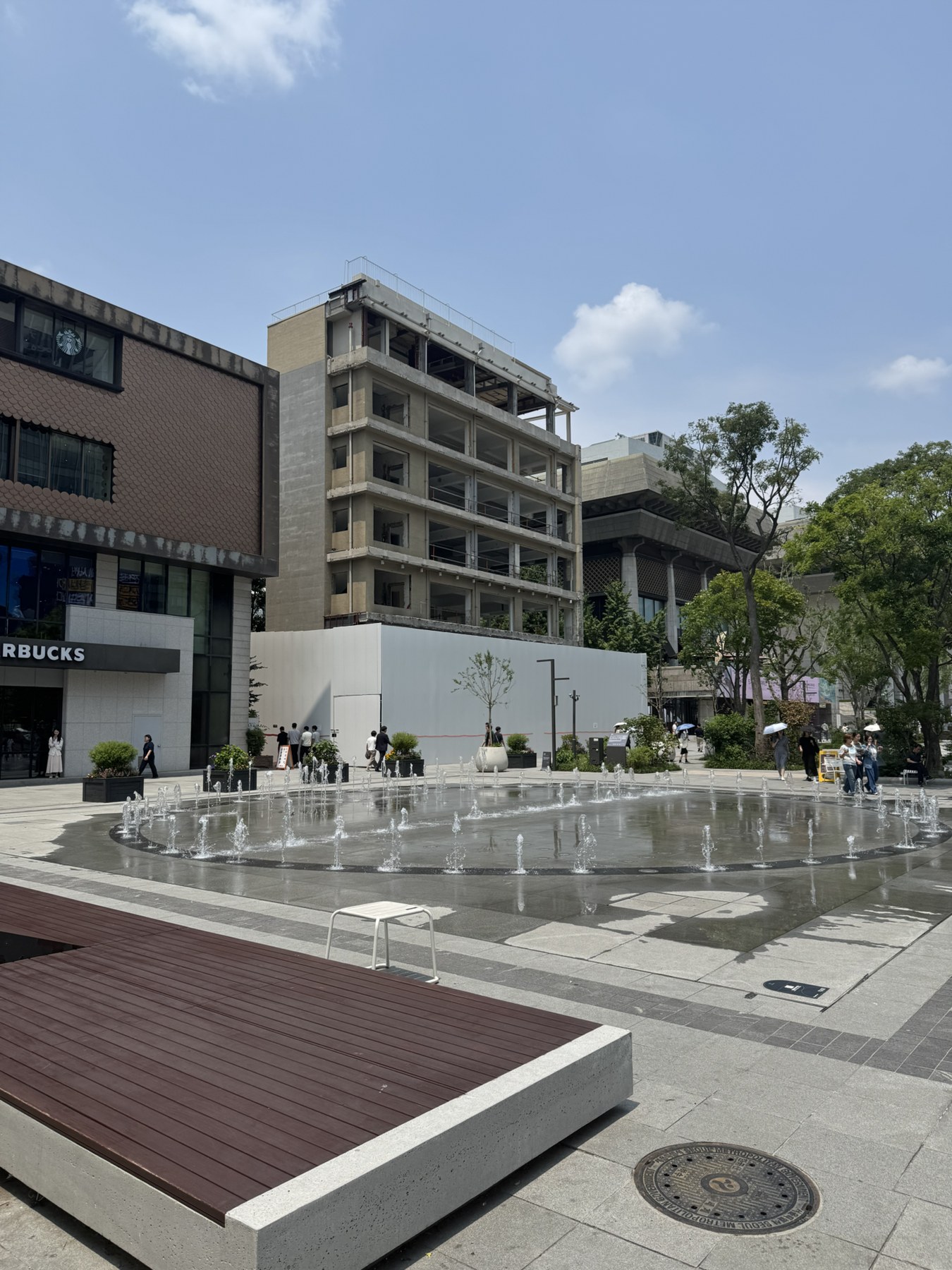
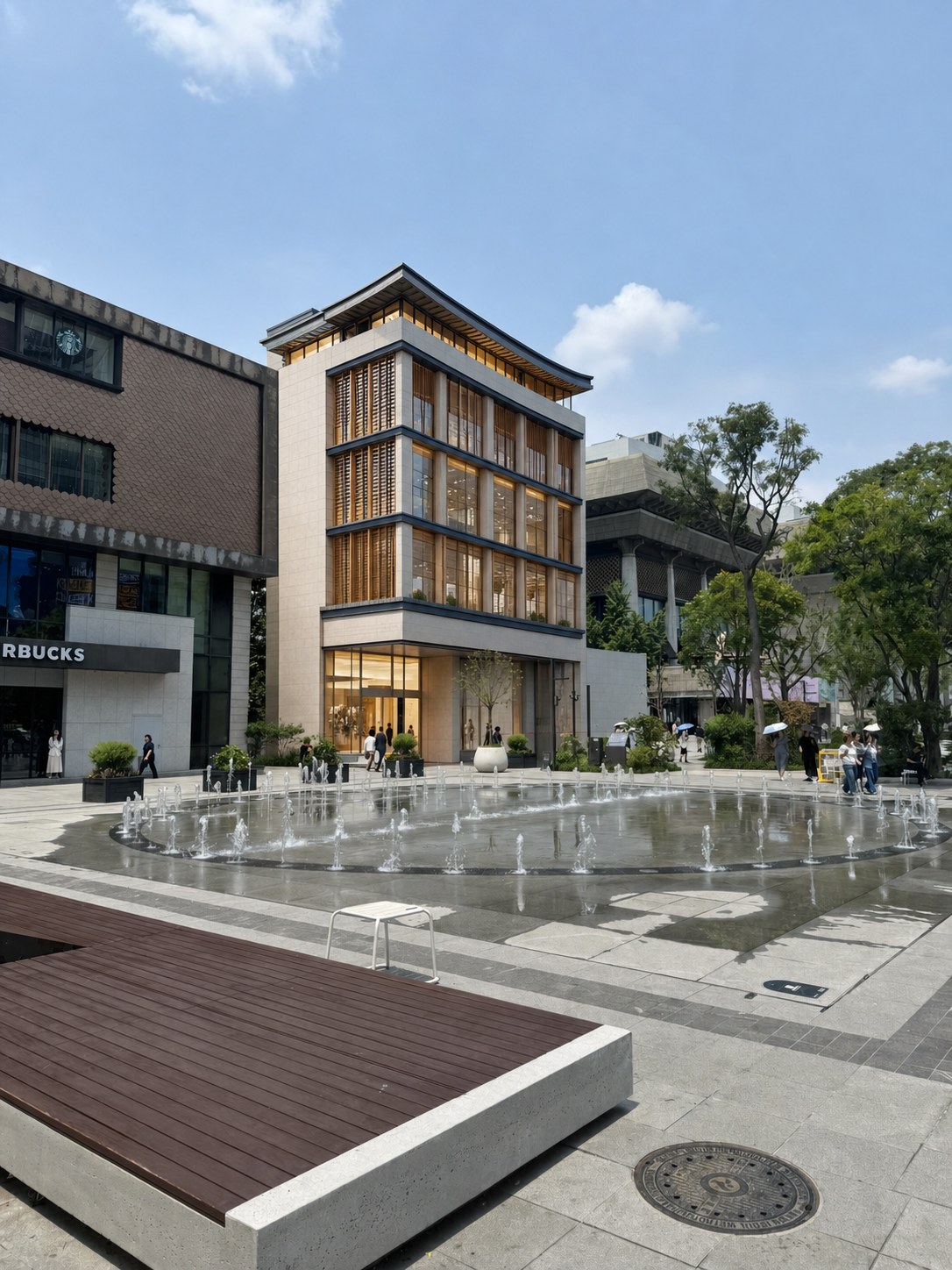
This building is not ours, and this is not a development proposal. The images are an urban-context photograph and an uncommissioned concept illustration—a visual prayer for what might one day be possible in the heart of Seoul. No museum foundation, land, building, approved design, construction project, or physical museum currently exists.
Give
CrossCulture Community in Korea and CrossCulture Community Foundation in the United States receive and administer funds separately. Choose the destination and currency that fit your gift.
In Korea · Korean won
CC receives, holds, administers, and uses these funds in Korea. Korean gifts are not represented as U.S. tax-deductible donations.
In the USA · U.S. dollars
Give once or regularly to CCF. CCF retains discretion and control over U.S. charitable funds and uses them for its mission and board-approved work.
Join the CCF Supporter CircleIn the USA · U.S. dollars
Support CCF’s operating online SBM program and responsible preparation for its long-term vision. This does not imply that a museum foundation, property, construction project, or physical museum currently exists.
Give to Seoul Bible MuseumU.S. gifts are received by CrossCulture Community Foundation, a Texas 501(c)(3) public charity (EIN 84-2974290), which retains discretion and control over all charitable funds.